
New York, New York: the city so nice, it exists only in your memory. Combat! blog has returned to its point of origin and the loving embrace of Stubble’s futon, and everything is as it once was, except for our surroundings. Those have remained the same by changing utterly. On the plus side, there’s a delicious barbecue place on 6th Street. On the minus side, they’re tearing down Norman’s, which I never really went to but pleased me nonetheless when I shuffled by. Today is Friday, and maybe you should have enjoyed it more while it was. Won’t you collect and recollect with me?

Combat! blog hurtles through space, isn’t useful
The quiet car on Amtrak may be mankind’s greatest achievement. From where I sit, silently emitting waves of discouragement toward anyone who might want the adjacent seat, the train feels an order of magnitude better than a plane. Fact: it does not lurch up and down in a sickening fashion. Nor does it give people in fake-looking badges license to search my bags. Best of all, everyone rides in placid silence. It’s exactly like being dead, and not just because I’m on my way to someplace hot and crowded. I’ll be in New York this weekend, which will be delightful. I’m interpreting this trip as an excuse not to blog today, so I can look out the window and reflect on a strip of trees, marshes and peeling houses that were once familiar. Everything old is new again—even me. We’ll be back tomorrow with Friday links.
Kim’s Video to close, ending taste identity
I take issue with Emilie Friedlander’s claim that Kim’s was the snobbiest record store in New York City; that title belongs to Other Music, whose microfine genre shelving distinguished, for example, “trance” from “dream.” But Kim’s was cool, and its employees liked bands and movies that you did not know about. Paradoxically, that made them cool to those of us who prided ourselves on not liking what other people liked. The defining feature of popular culture was that everybody knew about it, and popularity correlated inversely with quality—in tastes, at least, if not in individual works. Except now, thanks to the internet, everybody knows about everything.
On living all you can
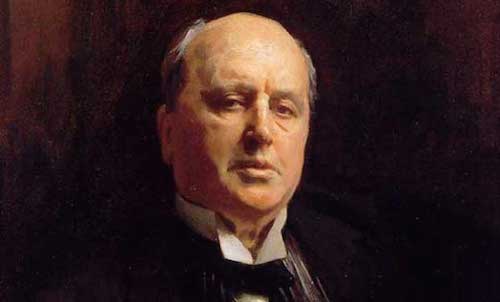
“Live all you can,” Henry James writes in The Ambassadors; “it’s a mistake not to.” He speaks through Lambert Strether, the 55 year-old POV character whose generous perceptions and sense of regret make him a stand-in for James himself. Strether experiences Paris as a reminder that he has not lived all he could. He urges young Bilham to cherish “the illusion of freedom,” to indulge the feeling of guiding his own life—not in any particular way but vigorously, fervently. “Live!” he cries, implying that he has not, and that we are in danger of making the same mistake. But of course we wind up living anyway.
American Spring somehow falters; US government remains intact
It’s Monday, and the federal government appears to be functioning much as it did on Thursday. Either Operation American Spring has failed, or the mainstream media has predictably covered up the resignations of the President and congressional leaders from both parties, along with the repeal of virtually all federal taxes. My money is on the second one, because I am a self-deluding maniac. In retrospect, Col. Harry Riley’s prediction that “10 to 30 million” patriots would mass on the National Mall this weekend may have been unreasonable. But isn’t that what the Tea Party/constitutional patriot movement is all about?