

Friday links! Triumph of theory edition

The cat fits in the box.

Japanese cat celebrity Maru fits in the box.

To paraphrase George Bernard Shaw, some people see things as they are and ask why; others see things as they never were and ask why the media is lying. The world of theory is invariably preferable to the world of, you know, the world. We derive our broad principles from the specific around us, but explicit language feels more concrete and understandable—more true—than the details. So after we extrapolate our theories and take them to heart, we return to the real and identify the places where it doesn’t match theory as flaws. Today is Friday, or at least it should be, and anyone who tells me otherwise has screwed up the progression of days. Won’t you demand that the flesh be made word with me?

Continue reading

Billings editor withholds documents that paint senator in “harsh light”

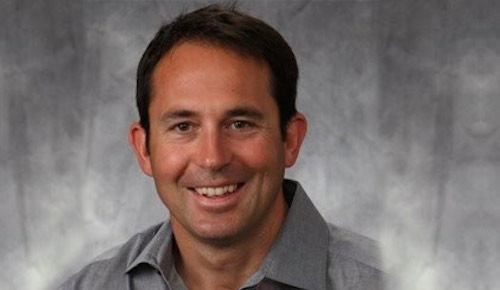
Montana Senate Majority Leader Jason Priest (R–Billings) in soft light

Montana Senate Majority Leader Jason Priest (R–Billings) in soft light

First of all, what happened to Jason Priest’s shoulders in this photograph? He looks like he was in a Delorean accident that prevented his mother from falling in love with his father. Second, what happened to the charging documents in the Billings Gazette story about Priest’s arraignment for allegedly throwing his toddler and beating his wife’s boyfriend? It looks like editor Darrel Erhlick didn’t run them because they featured a state senator saying the c-word. That can’t be it, though, because knowing Priest used British language with his wife cannot possibly damage his reputation more than knowing he (allegedly) committed a domestic assault, right? The good news is that all charging documents have vanished from crime stories on the Gazette site since Erhlick’s explanation. The bad news is that Lee papers seem more conspicuously in the pocket of the Republican Party than Montanans imagined. You can read all about it in my column for the Missoula Independent, which is what you get instead of a blog today. Maybe if you fudging coconuts stopped acting like white trash in front of the house, I’d treat you nicer.

Supreme Court strikes down contribution limit

Supreme Court Justice Antonin Scalia

Supreme Court Justice Antonin Scalia

The Supreme Court ruled on McCutcheon v. FEC this morning, and American campaign finance restrictions got a little bit looser. I know what you’re thinking: finally, money can play some kind of role in electoral politics. In a 5-4 decision, the court overturned the individual aggregate limit on contributions to political parties, so you no longer need content yourself with donating a scant $48,000 to candidates every two years and $74,600 to party committees. Individuals can now give the parties of their choice as much money as they damn well please. As Chief Justice John Roberts put it, “there is no right in our democracy more basic than the right to participate in electing our political leaders.”

Continue reading

Department of Correcting update: Sentences

spelling-mistake-1

It turns out that we made a lot of mistakes lately—by “we” I mean the Combat! blog interns, whom I made the mistake of hiring, but also society—so I thought we might devote today’s post to taking them back; by “them” I mean the mistakes, not the interns, who will be taken back at the end of the semester by South Carolina State or whatever. Can somebody fix that sentence and bring me a pain au chocolat? Come on, people—get it together.

Continue reading

Climate change as a prisoners’ dilemma

"Rrrat's okay, you guys. We would have done the same to you."

“Rrrat’s okay, you guys. We would have done the same to you.”

The Intergovernmental Panel on Climate Change has released its latest report on intergovernmental panels climate change, and our situation does not look good. Contrary to a number of anonymously funded think-tanks who insist that everything is fine, the Yokohama panel warns that “nobody on this planet is going to be untouched by the impacts of climate change.” The good news, though, is that poor people are going to get touched a lot harder and in more uncomfortable places. The big warning from the panel is food scarcity, which will ironically starve people in undeveloped nations—the same people who contribute least to carbon emissions. Climate change is an ethical issue. The people who are doing it most are mostly doing it to other people, which makes it a kind of prisoner’s dilemma.

Continue reading