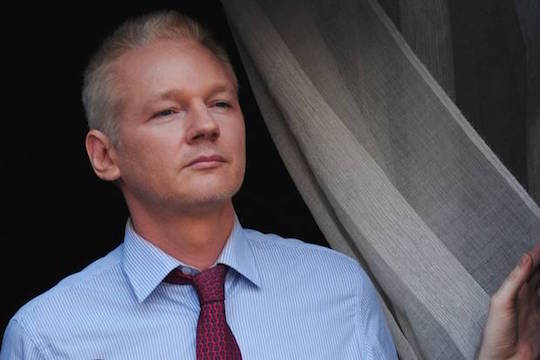
Wikileaks, the activist journalism/espionage organization run by creepy weirdo Julian Assange, has offered a $100,000 bounty for text of the Trans-Pacific Partnership trade deal. I checked my computer, and I don’t have the .pdf. It turns out the terms of the Trans-Pacific Partnership are secret. Details of the 12-nation agreement—reputed to restrict the sale of generic pharmaceuticals, constrain fair use of copyrighted materials, and created an international trade court where corporations can sue national governments—are secret. None of that stuff I just listed is necessarily true. Right now, the text of the TPP is available to members of Congress, who can read the treaty in a special room but are not allowed to discuss its contents publicly. Representatives of about 600 private companies can also access the document via a secret internet portal. The general public cannot.
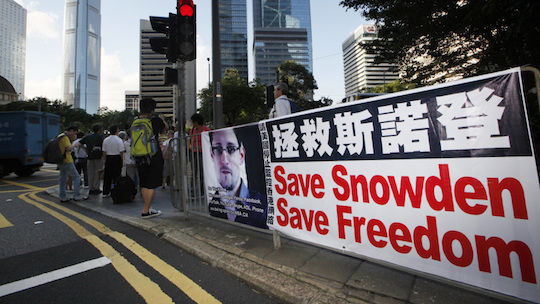
USA Freedom Act to protect USA, freedom, blanket surveillance
Last week, Congress passed the USA Freedom Act, which modifies the blanket surveillance programs the NSA was totally going to tell us about before Edward Snowden committed treason by telling us first. Obviously, the USA Freedom Act is a big improvement on the Patriot Act. Look at the names. Patriotism is good, but it’s only a means to certain ends: namely, USA and freedom. Now that both those elements are secure, we can put Randy Paul back in his original packaging and sleep tight, right? That seems to be the message. If there’s one thing we know just hearing the name of the USA Freedom Act, it’s that Congress wants to assure us everything is cool. Perhaps that should give us pause.
Friday links! That settles that edition

The car in which two unarmed people were killed by Cleveland police in 2013. Photo by Aaron Josefczyk
Sometimes it seems like a controversy is going to go on forever. For the rest of time, pillars of the business community will demand that schoolteachers carry guns for safety, and Their Eyes Were Watching God will remain an important book even though it sucks. But great controversies settle. Temperance is over. Nobody has been called upon to recant his model of a heliocentric system lately, and gay marriage might become boring within our lifetimes. Maybe the insoluble problems of our age are the settled facts of history. Today is Friday, another cut in the thousand by which disagreement lives for a while and dies. Won’t you answer the big questions with me?
“It keeps getting worse and worse”: Three trials, two county attorneys, one rape acquittal
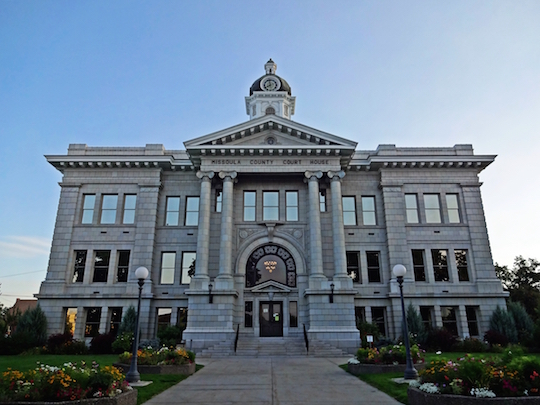
Back in February, I met a young woman who had just returned to Missoula to testify as the principal witness in a rape trial, again. The first trial of State v. Timothy Eugene Schwartz ended in a hung jury. A week before the second trial, Jane Doe learned her special prosecutor had been dismissed by the new Missoula County Attorney. A few days later, the second attempt to resolve State v. Timothy Eugene Schwartz ended in a mistrial during jury selection. Last week, Jane Doe came back to Missoula and told her story in court again. The jury believed her and thought the defendant was lying. They found him not guilty.
“The justice system sucks,” Jane Doe says. She is 20 years old. She came to Missoula for her freshman year of college and left the alleged victim in a rape acquittal.
You can read about her experience over 15 months, three trials and two county attorneys in this feature I wrote for the Missoula Independent. It’s a straight news story—something I don’t do very often, but I think it’s important. If you read one thing I wrote this year that does not portray Ted Cruz as an ambiguously gay detective, read this. We handle rape wrong, not just in police stations and prosecutors’ offices but in jury rooms too. Everyone I talked to wanted to help Jane Doe, but in the end she felt “screwed.” It’s an expression she does not use lightly.
Professor’s essay provokes series of Title IX complaints
Three months ago, Laura Kipnis wrote an essay for the Chronicle of Higher Education called Sexual Paranoia Strikes Academe. In it, she argues that Northwestern’s new policy forbidding professors from dating undergraduates presumes young adults are powerless before the charismatic and institutional powers of teachers—presumes it in a way that encourages students to think of themselves as powerless, too. Quote:
It’s the fiction of the all-powerful professor embedded in the new campus codes that appalls me. And the kowtowing to the fiction—kowtowing wrapped in a vaguely feminist air of rectitude. If this is feminism, it’s feminism hijacked by melodrama. The melodramatic imagination’s obsession with helpless victims and powerful predators is what’s shaping the conversation of the moment, to the detriment of those whose interests are supposedly being protected, namely students. The result? Students’ sense of vulnerability is skyrocketing.
She also describes, in vague terms, recent allegations against fellow Northwestern professor Peter Ludlow. Shortly thereafter, two Northwestern graduate students filed their own Title IX complaints against her, saying the essay constituted “retaliation” and discouraged victims of sexual misconduct from coming forward. A subsequent investigation cleared her of wrongdoing.