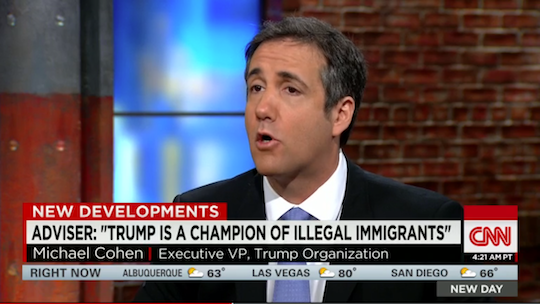
If Donald Trump lied any more often, he’d have to guard a door in a logic puzzle. He does not always lie. He’s not at the dry cleaners like, “I’m Marie of Roumania, and I’m here to pick up my dog.” But although he periodically speaks truth, he is so much more likely to disregard it that his defenders urge us not to take him literally—that is, as though his words had fixed meaning. Trump is a bullshitter. He might be the chief bullshitter of our bullshit age. So can you imagine being his lawyer? One pities such people. How much bullshit must Michael Cohen, Sheri Dillon, and the rest of Trump’s team of paid advocates wade through to convert his raw, jazz-style bullshit into something finished enough to bullshit a court of law? Today is Friday, and even the president needs fixers. Won’t you make this all go away with me?
Author: Dan Brooks
Quist is a deadbeat. Gianforte is rich. You love the rich guy, right?
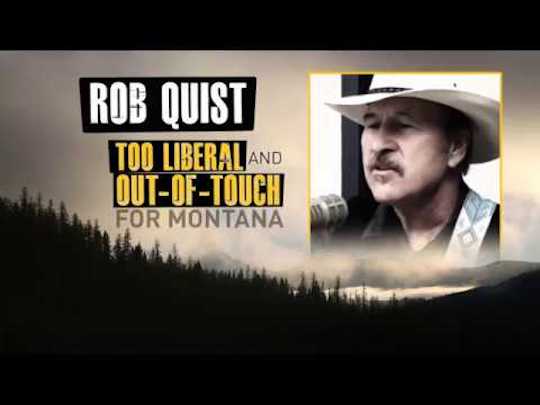
Montana’s special election is one week away, and the Rob Quist campaign is starting to look like a series of unforced errors. Let us begin with his nomination. Quist was handpicked by the Democratic Party, not by the usual primary system. Somehow, no one in that august political body thought to run a credit check. Pretty much the first story that came out was about the liens filed against their candidate for unpaid property taxes in 2011 and the bill for which he stiffed a contractor in 2001. I can see such problems haunting a popular favorite, but the Democrats chose Quist for his electability. Surely there was some other Democrat in the state who lacked not just political experience but also a debt trail.
Fortunately, the Quist campaign is staffed by experienced operatives from the state party. These old hands know the voters of Montana well enough to find sure ways to distinguish Quist from his opponent—for example, by running the exact same campaign ads. That’s how you win as a Democrat: by acting like a Republican. This principle explains why Quist downplayed his support for single-payer health care and emphasized his support for guns. It also explains why Hillary Clinton is president now. It does not explain why campaign manager Les Braswell accidentally tweeted as The Montana Cowgirl from the Quist campaign account, but we can’t explain everything. He probably got hacked.
Anyway, the Democratic Party is incompetent, even in the last best place. Facing an opponent who just lost a statewide election for governor in which he underperformed the top of his ticket by 20 points, they appear to be headed for defeat. Now is the time to reflect on deep questions. My deepest: In the present economic climate, how is being rich not the biggest obstacle a candidate can face?
American inequality is the worst it’s been in 100 years. Montana has the second-lowest per capita income of any state in the Union, and a politically inexperienced billionaire is on the verge of impeachment in Washington. Yet Quist has said nothing meaningful about inequality. Republicans, convinced we love millionaires as much as they do, are using his personal debts as a cudgel. Call me a pinko, but I wonder if voters might identify more with the guy whose $20,000 debt is wrecking his life than the guy who sold his company to Oracle for $1.5 billion. You can read all about this strange discrepancy in this week’s column for the Missoula Independent. It’s a particularly exciting issue, containing not just my inchoate palaver but also the story of a growing schism in the Montana Libertarian Party and your girl Michael Siebert’s feature-length essay on why the left should embrace gun ownership. Check ’em out. We’ll be back tomorrow with Friday links!
This is bullshit
I am snowed under around here, figuratively and damn near literally. While Combat! blog slept off an inordinate quantity of work last night, Missoula got a couple inches of snow. It was 85 this time last week. For the second year in a row, my lilac bush has taken a brutal beating, and dazzling mountain springtime has lapsed back into drear. Every year, I learn the same hard lesson—don’t trust spring—and every year I forget. Speaking of lessons repeatedly unlearned, President Trump put out another scandal yesterday. Perhaps you heard that he tried to get James Comey to call off the investigation of Michael Flynn. That’s obstruction, right? This one has to be the one that brings him down. Yet part of me thinks it won’t matter. Maybe it’s just the pervasive sense of unreality that the Trump presidency has generated, but I have become scandal fatigued. I have a hard time believing that anything can derail the Trump train before it pulls us all over the edge of a cliff. Either way, though, we’re watching history. This is either the unfolding of a Watergate-style meltdown or the beginning of the era when literally nothing that happens matters to American democracy. We live in interesting times.
Okay, will this do it?
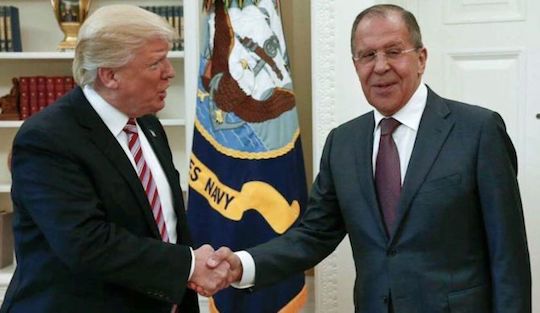
Yesterday, President Trump divulged classified US intelligence during a meeting with Russian diplomats Sergey Kislyak and Sergey Lavrov. According to the Washington Post, the disclosure pertained to a plot by ISIS to smuggle bombs onto planes in laptops. Of less concern than the material itself is the possibility that its divulgence could compromise intelligence sources and methods, since “a Middle Eastern ally that closely guards its own secrets provided the information.” There’s also the aspect of this situation where Trump actually does on purpose exactly what he attacked Hillary Clinton for potentially doing by accident with her emails. So this is the scandal that finally undoes the Trump administration, right? Right? [crickets][racist crickets]
This $150,000 medical bill for snakebite is not fake
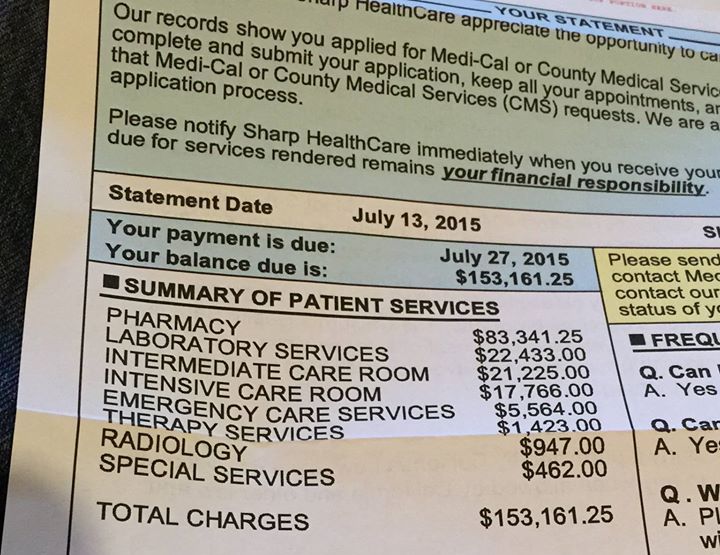
The image above shows the bill for an emergency room visit that a man without insurance incurred after he was bitten by a snake. It’s been floating around Twitter, where a lot of users assume that it is fake—particularly users from countries that offer some form of socialized medicine, if anecdotal reading is any indication. But this bill is real. CBS News confirms that Todd Fassler got it in 2015, when he posed for a selfie with a rattlesnake and got bitten. That’s a very dumb thing that Fassler did. But the stupidity of taking a picture with a rattlesnake pales in comparison to the evil of charging $83,000 for the antivenom CroFab, which Fassler required to live.
Only one US manufacturer makes antivenom for rattlesnake bites, so they can charge what they want. So can the hospital, which first treated Fassler in its emergency room before moving him to intensive care for a few days. All this stuff is expensive because of concrete market forces, but from the perspective of the person who actually buys health care—the guy with a puffy arm whose heart will stop if he doesn’t agree, in advance, to pay whatever the hospital charges—the system is completely arbitrary.
Imagine if a man dragged himself to your door in the night, dying of an injury that you had the power to treat. “I’ll save your life,” you say, “but you have to buy a house and give it to me. Alternatively, you can become my indentured servant.” You would be an asshole. It’s immoral to extort dying people for more money than the median American household makes in three years. But because this process happens through a series of billing companies and office functionaries, we think of it as unavoidable. No single person is responsible, so it’s nobody’s fault. We have invented a system that ruins lives in the process of saving them, because the alternative is to do the difficult work of overhauling a broken system.
But what about personal responsibility? If Fassler didn’t want so much debt, he shouldn’t have gotten bitten by a snake. I say unto you, dear reader, that this kind of appeal to personal responsibility is a dodge. People are going to get bitten by snakes. They’re going to do really stupid stuff and incur injuries they easily could have prevented, because this is the way of the world. Saying sick people are responsible for what happens to them abdicates our responsibility to treat the sick. It posits an imaginary world without illness, when illness has been an aspect of human life since the beginning. The problem is not that people need medical treatment. It’s that we refuse to think of a fair and decent way to give it to them.