Daines ducks constituents, complains too few in DC drive pickup trucks

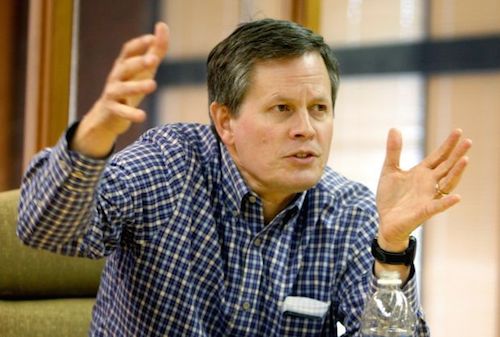
US Senator from Montana and convicted goblin Steve Daines

Steve Daines’s first six weeks as a senator have not been easy. He happened to be presiding over the confirmation hearings for Attorney General Jeff Sessions last month, when Majority Leader Mitch McConnell instructed him to gavel down Sen. Elizabeth Warren (D-MA). That got him on the news. Then he cast the deciding vote to confirm Secretary of Education Betsy DeVos, despite calls to recuse himself after she gave $48,000 to his campaign. Last week, he came home.

He was supposed to address the state legislature last Tuesday, but a crowd of protestors that gathered at the capitol caused him to reschedule at the last minute. He spoke to the legislature Wednesday, after protestors had safely gone home. The very next day, he went on Twitter. “Montanans can do a better job than D.C. bureaucrats who’ve never driven a pick-up and have a hard time finding Montana on a map,” he wrote.

Root toot ‘merca truck, you guys. This kind of pandering was my least favorite thing growing up in Iowa, where the performance of hick-ness was integral to public life. But the politicians of Montana take it to new heights. The day after Daines complained that the failure of bureaucrats to drive trucks left them unable to operate the US federal government, he posted a video from Big Sandy, in which he claimed to be “getting all over Montana” to talk to his constituents.

The senator didn’t have to drive the back roads to find constituents; they had come to him 48 hours earlier, and he contorted his schedule to avoid speaking to them. Daines has never been a dynamic public speaker. Although he gets +1 to night vision and can be dangerous in groups, his main political advantage is that he is a party man. If you need someone to do what his superiors in the GOP say, Daines is your boy. It is therefore distasteful for him to pretend that he is some salt-of-the-earth type fed up with Washington, DC. You can read all about it in this week’s column for the Missoula Independent, in which we speculate on his truck-drivin’ bona fides and his life as a freshman in the senate dorms. We’ll be back tomorrow with Friday links!

Friday links! Dogged determination edition

Every American schoolchild knows they should never give up on anything no matter what. Like confidence, honesty, or patriotism, persistence is one of those good qualities that can never go wrong. The trick is to ignore failure. If some setback tempts you to reevaluate what you’ve been doing, put it out of your mind and soldier on. That’s how you guarantee that you enjoy a long, happy life, like a soldier. Today is Friday, and when all else fails us, we will still have our determination to succeed. Won’t you push deeper into the fishbowl with me?

Continue reading

Watch Stephen Miller practice TFA

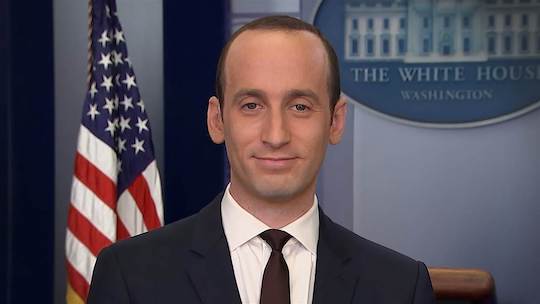
White House policy adviser and bop bag model Stephen Miller

Donald Trump is the president now, and no amount of controversy or trying to wake up will change that. Yet he continues to insist that voter fraud tainted the election he won. Speaking to senators last week, he said that thousands of illegal voters were bussed in to New Hampshire to swing the state for Hillary Clinton. On Friday, Federal Elections Commissioner Ellen Weintraub called on Trump to provide her office with evidence of this scheme. He did not. Neither did his adviser/mouthpiece Stephen Miller, who appeared on ABC News Sunday morning to produce this masterpiece of dishonesty:

So now we need a term for the converse maneuver to Total Fucking Denial: Total Fucking Assertion. Stephanopoulos keeps returning to the question of whether the Trump administration has any evidence that voter fraud occurred, and Miller keeps insisting that everyone knows it did.

“This issue of bussing voters into New Hampshire is widely known by anyone who’s worked in New Hampshire politics,” he says for the first time at :30. Over the next three minutes, he repeats this claim again and again. He also trots out the familiar statistics without substance—the remark that “millions of people are registered in two states” is particularly exasperating, since that doesn’t mean any of them travel to two states to vote on election day—but he keeps returning to his central thesis: everyone in New Hampshire knows this is happening. Everyone knows it so much that Miller doesn’t need to cite evidence. But everyone knows it. It’s very serious. Everyone knows it’s happening.

In Total Fucking Denial, the liar insists that something isn’t true despite overwhelming evidence. The man in this video—which contains swearing, mild violence, and a lot of high-register whining—gets caught going at his neighbor’s doorknob with pliers and a screwdriver but insists he wasn’t breaking in. There was something wrong with his door, he says, and he needed to take apart someone else’s to see how doors work. That’s TFD. There’s no way our burglar is going to convince the man behind the camera that he was only teaching himself locksmithing, but that’s not his objective. He realizes the situation will get worse not when the cameraman realizes he’s lying—since that’s already happened—but only when he admits he’s lying. That’s what TFD is for: situations in which the worst outcome only happens when you acknowledge the lie.

Miller takes a similar tack in the clip above. But his version of Total Fucking Assertion enjoys an advantage over TFD, in that you can’t prove a negative. Stephanopoulos cannot prove that voter fraud in New Hampshire didn’t happen. He can only demand evidence for Miller’s dubious claim that it did. Miller doesn’t have that, but he knows one weak form of evidence is just saying something over and over. He keeps repeating that “everybody knows” thousands of people were bussed in to New Hampshire to vote illegally. Stephanopoulos doesn’t believe him, but some people watching at home probably will.

That’s the other difference between TFD and Total Fucking Assertion: TFA is for an audience. If the last year has taught us anything, it’s that you don’t need evidence to convince a lot of people. You can just keep repeating the same baseless claim, and eventually it will become well-known enough that it stops being a question of true or false and becomes a question of Republican or Democrat, real news or fake news, pro-Trump or anti-. Once people decide that a statement is political, they’re willing to believe anything. That’s what Stephen Miller is exploiting here, because he is a bad person. I hope he runs out of sleep medicine and has to think about it.

Why bother silencing Elizabeth Warren?

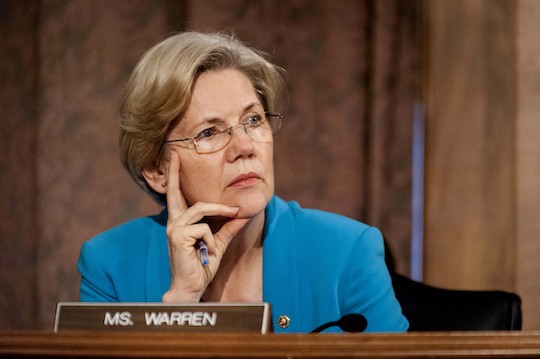
Yesterday, as the Senate heard testimony regarding the almost certain appointment of Sen. Jeff Sessions (R–AL) to the position of attorney general, a weird scuffle erupted between Sen. Elizabeth Warren (D-MA) and Majority Leader Mitch McConnell (R–Home for Orphan Turtles.) Warren was attempting to read a 1986 letter from Coretta Scott King, wife of Martin Luther King, that accused Sessions of using “the awesome powers of his office in a shabby attempt to intimidate and frighten elderly black voters” when he was US attorney for the Southern District of Alabama. McConnell moved to silence Warren under Rule XIX, which forbids senators from “ascribing to another senator…any conduct or motive unworthy or unbecoming a senator” during debate. Here’s a video:

In this scene, the role of Frightened Lackey is played by Montana’s own Sen. Steve Daines, who looks like he has either eaten bad fish or does not want to adjudicate a rules dispute involving the leader of his caucus. Daines sided with McConnell, of course, and Republicans voted to formally silence Warren. Three questions seem relevant here:

  1. Does Rule XIX apply to quoted material? It was not Warren who ascribed to Sessions conduct unbecoming a senator, but rather Mrs. King, whose words Warren read. This might seem like a distinction without difference, but imagine if the Senate were conducting, say, a bribery investigation into one of its members. Would an affidavit from someone who claimed to have paid that senator a bribe violate Rule XIX, if it were read aloud by another senator?
  2. How is the Senate supposed to conduct a confirmation hearing regarding one of its own members without violating Rule XIX? Warren didn’t bring up this letter in a debate about farm subsidies. It speaks to Sessions’s fitness for office, and any debate on that subject is likely to impugn his motives or conduct at some point. At the moment the Senate begins to debate Sessions’s appointment as attorney general, he ceases to become a senator and becomes a candidate for that office. As a senator, he doesn’t get to participate in his own confirmation hearings. Why should he enjoy the other privileges of a senator in that context?
  3. So are Republicans just trying to make Warren’s career, or what?

In another world, Warren spends the next four years slipping from the national spotlight, as Republican control of all known branches of government denies her the forum to publicly grill bankers in the ways that have made her a progressive hero. Or they could martyr her. McConnell seems committed to the second course, even going so far as to furnish a title for her memoir by complaining that “she was warned. She was given an explanation. Nevertheless, she persisted.” This approach seems less than tactically astute. Sessions is going to be attorney general. If Betsy DeVos proved anything, it’s that none of Trump’s appointments will go unconfirmed. So why not let Warren read King’s letter to a mostly empty chamber and a couple thousand viewers on C-SPAN?

Instead, he contributed to her reel. As of this writing, the video of McConnell silencing Warren featured in this post has 350,000 views. That’s just this version; there are a dozen more on YouTube and floating around the internet. Is the majority leader really foolish enough to make a spectacle of Warren’s censure, when the action itself accomplishes so little?

Apparently, he is. The explanation that he is intentionally making Warren the face of the progressive Democratic Party, in the hopes that she will overplay her hand and tarnish that brand in the future, seems a little too 3-D chess to be plausible. Remember the poker player’s rule: don’t assume intelligence. It seems like McConnell has blundered here, possibly because there are no longer any checks on his power. This silver lining is itself mostly dark cloud, but perhaps Republicans will keep overplaying their hands.

The president does not read books

Donald Trump takes a moment to savor his rich inner life.

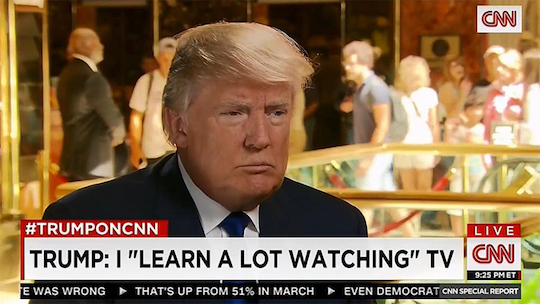
The President of the United States does not like to read. Back in July, Donald Trump told the Washington Post he didn’t have time to read books. “I never have,” he said. “I’m always busy doing a lot. Now I’m more busy, I guess, than ever before.” According to that story, he mostly reads newspaper and magazine articles about himself. It’s hard to grudge him that, since if I were president I would probably either resolve to read absolutely no such coverage or wind up poring over it all the time. But it also seems like Trump is watching a lot of television. Two weeks ago, Maggie Haberman reported that the president gets up at 6am and watches TV until his first meeting at nine. In an alternately fascinating and terrifying behind-the-scenes story this weekend, she and Glenn Thrush found him retiring to the residence around 6:30 each evening to watch TV, tweet, and talk on the phone. If he goes to sleep at 10pm, that’s another three hours of television every night. I sympathize with his complaint that he is too busy for books, but the president appears to be spending 30 hours a week in front of the TV. Even if he only read ten pages an hour, he could use that time to knock off a novel, or at least something by Malcolm Gladwell.

Continue reading