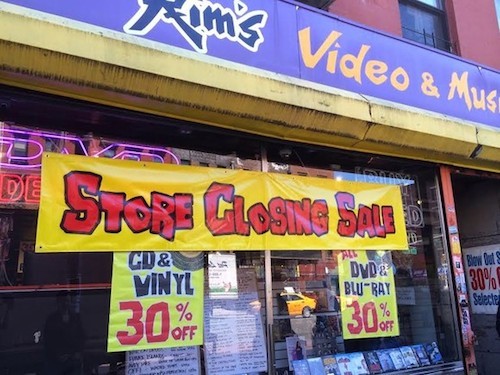
I take issue with Emilie Friedlander’s claim that Kim’s was the snobbiest record store in New York City; that title belongs to Other Music, whose microfine genre shelving distinguished, for example, “trance” from “dream.” But Kim’s was cool, and its employees liked bands and movies that you did not know about. Paradoxically, that made them cool to those of us who prided ourselves on not liking what other people liked. The defining feature of popular culture was that everybody knew about it, and popularity correlated inversely with quality—in tastes, at least, if not in individual works. Except now, thanks to the internet, everybody knows about everything.
Search Results for: steve king
Friday links! Pushing the medium edition
Certain media are suited to certain stories. When he was torturing future generations with the Poetics, for example, Aristotle realized that plays work best for narratives that are unified in place, time and action. Movies based on plays invariably feel cramped and stultified, using our most agile temporal medium to tell the story of four people walking in and out of a room to argue. Movies are about bus explosions and journeys to Mordor. Movies about interiority, on the other hand, rarely work, whereas novels of consciousness comprise our must vibrant era of literary production. So what kind of story is the internet good at telling? Today is Friday, and we’re still figuring out the form. Won’t you prod at the constraints with me?
Friday links! Triumph of theory edition
To paraphrase George Bernard Shaw, some people see things as they are and ask why; others see things as they never were and ask why the media is lying. The world of theory is invariably preferable to the world of, you know, the world. We derive our broad principles from the specific around us, but explicit language feels more concrete and understandable—more true—than the details. So after we extrapolate our theories and take them to heart, we return to the real and identify the places where it doesn’t match theory as flaws. Today is Friday, or at least it should be, and anyone who tells me otherwise has screwed up the progression of days. Won’t you demand that the flesh be made word with me?
Cato, O’Rourke file theoretically funny amicus in defense of “truthiness”
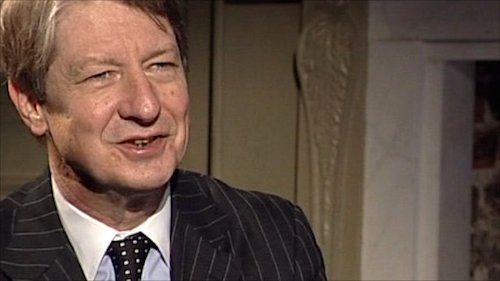
The Cato Institute and PJ O’Rourke have filed an amicus brief in the Supreme Court case Susan B. Anthony List v. Driehaus, arguing that “truthiness” is an essential part of political discourse. Props to Jacek for the link. Susan B Anthony List is an anti-abortion group that purchased a billboard claiming Ohio congressman Steven Driehaus supported taxpayer-funded abortion because he voted for the Affordable Care Act, which does not provide taxpayer funding for abortions. The claim potentially ran afoul of Ohio’s False Statements Law, which prohibits making false statements about political candidates. There are several reasons why the case is likely to be decided on procedural grounds—not least that Driehaus lost and withdrew his complaint—but Cato and O’Rourke make an interesting point.
Missoula County Attorney enters endgame
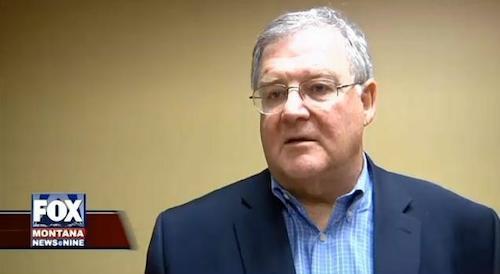
Fred Van Valkenburg is back from vacation today, and I do not envy him his voice mailbox. Probably he checked it while he was away. We know he read the paper, because he sent attorney Jim Ghidella an angry email after Ghidella wrote a letter to the editor critical of Van Valkenburg’s fight against the US Department of Justice. For those of you who have not followed this story: in 2012, the DOJ announced that it was investigating the University of Montana, Missoula police, and the county attorney’s office for improper handling of sexual assault cases. The police and UM cooperated, and their investigations are now over. Van Valkenburg, on the other hand, has insisted all along that Justice has no jurisdiction over his office, and recently got $50,000 from the county commission to pursue a declaratory judgment against them. That lawsuit was filed earlier this week—just in time for us to learn about the agreement that Montana’s state attorney general made with the DOJ in 2012 to cooperate with investigators.