Brexit voters don’t know anything, says media charged with informing them

Idiots

Idiots

The morning after Britons voted to leave the European Union, Matthew Yglesias posted a piece to Vox headlined Brexit: British people probably should have Googled this stuff before voting. It reported that as polls closed and Leave’s narrow victory became apparent, Google searches such as “what happens if we leave the EU?” increased more than 250 percent. After Brexit results were announced, “what is the EU?” became the second-most searched question on the subject.

The cynical explanation was too good to resist. Yglesias took this Googling of Brexit-related information as proof the Leave vote was motivated by ignorance, citing it as a reason to leave policy decisions to representatives and not the people themselves. Over at The Washington Post, Brian Fung ran a similar take on the same numbers headlined The British are frantically Googling what the EU is, hours after voting to leave it. Both of these stories offer an irresistible narrative: that voters made this evidently bad decision without understanding what they were doing. But there are two problems with that story:

  1. Although the volume of EU-related searches tripled, the total number of searches for “what is the EU” came to less than a thousand, and the others were comparably low.
  2. “Public Ignorant” is a funny headline to read in the newspaper.

Continue reading

Friday links! How dumb are the fascists at my door? edition

Like so many photoshops, it really makes you think

This obvious Photoshop really makes you think.

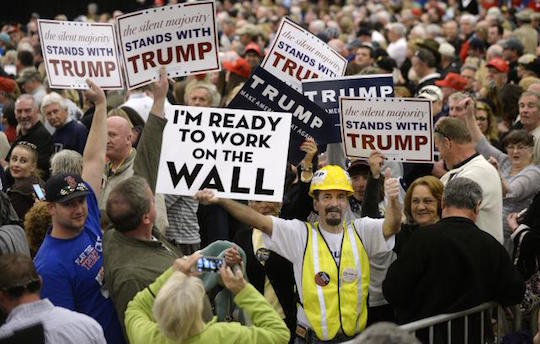
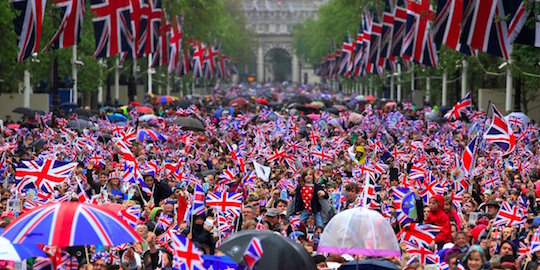
As near as I can gather from the markets, Britain has voted to break off into the sea. The British pound sterling—or “kwat,” as the Cockneys call it—plunged to its lowest value in thirty years last night, after the United Kingdom voted to leave the European Union. It was widely perceived as a victory for white nationalism, after pro-exit politicians stoked fear of Muslim immigrants streaming into England on EU passports. “Brexit,” as leaving  became known, was so popular among assholes and so vehemently opposed by those who understood it—market analysts and journalists, mostly—that it came to symbolize the destructive ignorance of nationalist populism. This morning, the Washington Post reported that The British are frantically Googling what the E.U. is, hours after voting to leave it. They’re dumb, is what we’re saying here. But the events actually reported turn out to resemble what you’d expect from any major event:

At about 1 a.m. Eastern time, about eight hours after the polls closed, Google reported that searches for “what happens if we leave the EU” had more than tripled.

If such phenomena prove the stupidity of our neighbors, we’re going to run out of dunce caps. Also, our neighbors will eventually train dogs to smell books and find our secret hiding places. Today is Friday, and it’s the dumbs against the smarts. Won’t you assume which side you’re on with me?

Continue reading

Meanwhile, in Cascade County, MT

Rep. Randy Pinocci (R–Sun River) on Facebook

Rep. Randy Pinocci (R–Sun River) on Facebook

One thing I learned from Randy Pinocci’s Facebook timeline is that his wife is about take away his phone.  The rest we must gather from the news. The man from Sun River made headlines last week, when someone gave the Fairfield Sun-Times a copy of an email in which he proposed “a law that says impersonating a reporter is against the law maybe after we put a few of these idiots in jail we can get better reporting.” Bro, you must use punctuation when calling people idiots. It seems like Pinocci was pretty worked up when he wrote that, and he subsequently told the Sun-Times he had no intention to propose such a law. He was just sayin’ stuff.

One of Pinocci’s fellow Republicans from Cascade County, JC Kantorowicz, has been engaging in a little stuff-just-saying of his own. At a meeting of the county Republican Central Committee regarding delegates to the state convention, he became frustrated by the schedule and seemed to threaten a rival’s life. A transcript:

JC Kantorowicz, primary candidate in SD 10: “So does this mean I have to come back on the 21st to keep [former Rep.] Roger Hagan and [rival SD 10 candidate] Steve Fitzpatrick from going?

Chairman George Paul: Well, there’s a good chance you’re going to have to come back.

Sec. Judy Tankink: Unless you have a proxy. Would a proxy work in a situation like that?

Kantorowicz: A bullet would.

That’s not cool, but Kantorowicz has assured the Great Falls Tribune that he intended no threat, “implied or implicit,” to harm anyone. “If I make a remark because I’m tired as hell, I’m hungry, I want to go home and I sure as hell don’t want to come to the next meeting, it’s a flippant remark,” he said.

When I get tired, I talk about shooting people on-record at political party functions, too. Kantorowicz and Pinocci are on one side of a rift in the Cascade County Republicans that mirrors the larger split in the Montana GOP. Hagan and Fitzpatrick are moderates. Pinocci and Kantorowicz are hard-right conservatives. Their faction has largely been kept from the levers of power, partly because the schism has weakened the Republican majority in the legislature and partly because moderates have shut the right-wingers out. That’s probably a good thing, but it has accustomed them to operating in the realm of pure rhetoric.

Loose talk has become the modus operandi of Montana’s conservatives. They stand so little chance of making laws that their careers have become performances. Their speech, like their politics, is mostly theoretical. You can read all about it in this week’s column for the Missoula Independent. We’ll be back tomorrow with Friday links.

Commissioners sign petition, deny bias, postpone decision

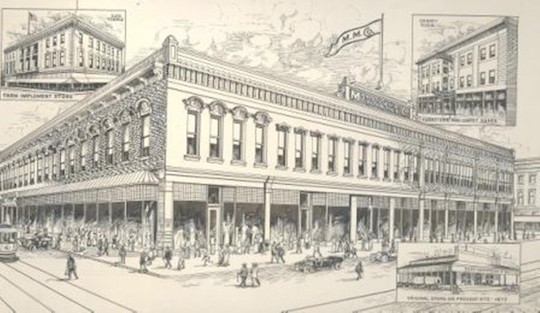
In the years after World War I, the Missoula Mercantile building moved three tons of huckleberry fudge a day.

The Missoula Mercantile, which once moved three tons of huckleberry fudge per day.

Bad news for business travelers: Missoula’s Historic Preservation Commission has put off deciding whether to let developers knock down the Missoula Mercantile Building and build a Residence Inn. It met for four hours last week. In addition to public comment that compared HomeBase Montana to ISIS, the commission addressed the recommendation of City Attorney Jim Nugent, who advised four members to recuse themselves for bias.

“I am still in shock that somehow we’ve been found guilty without any due process whatsoever,” commission vice chair Steve Adler told The Missoulian. I find him guilty of exaggeration. Nugent issued no verdict, because he held no trial. He did tell four commissioners that the city could be vulnerable to a lawsuit if the they didn’t recuse. Nugent’s office discovered that Adler, an architect, worked on his own plan to develop residential condominiums in the Mercantile building. He also signed a Save the Merc petition and liked various postings from a group of the same name on Facebook. So did commission chair Mike Monsos and commissioners Kate Kolwicz and Cheryl Cote.

First of all, alliteration on the Historic Preservation Commission has gotten way out of hand. Second, and perhaps even more importantly: Did you guys think signing petitions and liking Facebook posts from parties to a permit dispute that you’re adjudicating was appropriate? I am scared the answer is yes. Now’s a good time to remember that Missoula’s commissioners of historic preservation are all volunteers, and we’ve asked them to stop putting plaques on mansions just long enough to intercede in multimillion-dollar development deal.

This may not be a job for amateur government, but it has fallen to the amateurs’ lot. We installed these people, and we will foot the bill if their predictable errors in judgment trigger a lawsuit. You can read all about it in this week’s column for the Missoula Independent. Official motto: Your local newspaper that has an editor.

Friday links! Our shared inheritance edition

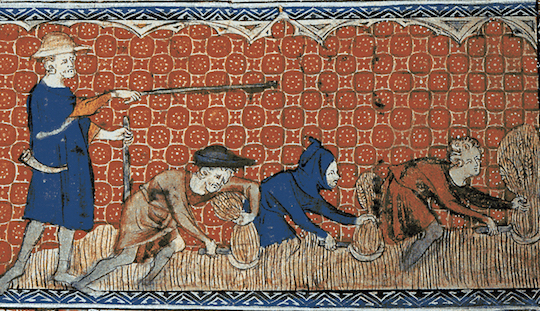
A reeve directs serfs on a feudal demesne, circa 1310.

A reeve directs serfs on a feudal demesne, circa 1310.

Much of my week has centered on a lawsuit. It’s not a trial; it’s a binding arbitration, and I am neither the plaintiff nor the defendant. But I appeared as a witness, with all the logistical wrangling that entails. In the process, I developed a sense of just how tenaciously we come to contest anything we contest formally. Once we hold an advantage—be it a parcel of money, a position in a market, or an inherited privilege—we become loath to share it with anyone, even in situations where sharing would seem completely reasonable if lawyers weren’t present. Today is Friday, and we cling to our inheritances fiercely when someone tries to take them from us. Won’t you put property ahead of propriety with me?

Continue reading