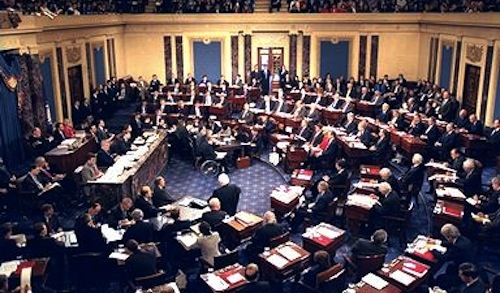
You know the deal between President Obama and Republican congressmen to extend the Bush tax cuts for households making more than $250,000 is real, because the New York Times is trying lamely to justify it. They make an okay point. David Leonhardt argues that the extension of unemployment benefits, the cut in payroll taxes and the various credits for college tuition and whatnot amount to another stimulus package. He’s right, in the sense that it costs $900 billion and hopefully the economy will get better after we do it. On the other hand, the original stimulus package didn’t blow $120 billion on the wealthiest 2% of Americans at a time when those Americans were convincing their poorer, fatter brethren to demonstrate in the streets about the federal deficit. And that’s what it is about the Obama tax cut agreement: it seems like a pretty good deal, provided you don’t think about American politics over the last two years.
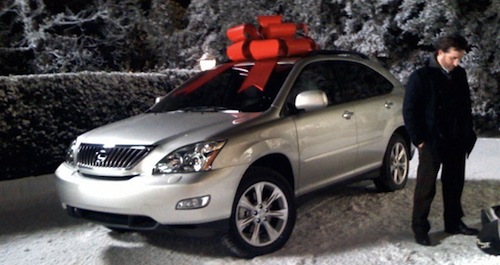
Somewhere there is an America that finds this Lexus commercial heartwarming
Those of you who watched last night’s exhibition match between the New England Patriots and a children’s football team dressed as the New York Jets were reminded, maybe fifty times, of the Lexus “December to Remember” Sales Event. That the good people advertising for Lexus revive this campaign every year and still insist on calling it a “sales event” should give you an idea of how well they understand the humans. They have studied our culture and our Lexus-buying habits, and they have determined that we like two things:
1) Christmas
2) Luxury
Now remains only to combine the two. Props to Ben “Bang” Gabriel for the tip, and don’t click “More…” unless you’re ready to watch a commercial that is just opulent as shit.
Senate continues its transition to world’s largest body of hostages
Remember back in high school, when we learned about the orderly progress of a bill through the legislative branch and/or how to express our feelings sexually, and I learned the first one? It seemed so simple back then: a bill began its metamorphosis into law when it got a majority of votes in the House and then the Senate, and it emerged a beautiful butterfly for the President to sign or subject to the hungry barn owl of veto. Even then, the Senate could pass it again with a two-thirds majority. That was the old US Senate. In the new Senate, a two-thirds majority is what you need to pass any bill at all. This system is great, since it frees up the senators to pursue A) negotiating various para-legislative compromises to get the aforementioned sixty votes and B) personal projects. Item (B) is what occupies Senator Herb Kohl (D–WI) lately, which is why he’s decided to block confirmation of nominated DEA chief Michele Leonhart. Yes, that’s a “D” next to his name. He learned it from watching you, Dad.
Friday links! Willing to do what others will not edition
Julius Caesar wrote that out of any 100 soldiers, ten will be utterly fearless, ten will panic and become useless at the first clash of swords, and 80 could go either way. Success in battle, says Caesar, depends on those 80 percent. At the risk of both paraphrasing one of history’s greatest generals and underestimating the value of numbers, victory belongs to those willing to do what others will not. This week’s link roundup is chock full of people who have not necessarily succeeded because of the merit of what they are doing. In many cases, they’re getting what they want in spite of that. But they’re doing things that their competitors won’t try, or that our various forebears and lawgivers just sort of assumed nobody would do. They’re the bold pioneers in the field of human decency, striking out into frontier lands of douche, and they are handsomely rewarded. The rest of us can chastise them for it, sure, but our disapproval will be ever undermined by our jealousy. Sort of.
Is there such thing as illegal information?
Deep in this New York Times article about Julian Assange’s sexual assault charges is another, more interesting story about Amazon’s decision to stop hosting the WikiLeaks website on its servers—a decision apparently prompted by a call from the Homeland Security and Governmental Affairs Committee. According to committee chair Joe Lieberman, staffers asked Amazon to explain its business relationship with WikiLeaks. They didn’t tell them to terminate that relationship, of course; that would be borderline-unconstitutional, and certainly creepy. They just called the multibillion-dollar web-based retailer and pleasantly inquired how many of their web servers might be connected to the activities of a publicly-declared enemy of the US government. By sheer coincidence, Amazon shut down WikiLeaks’s site a few hours later.