
Why does work suck? Analysts blame private equity

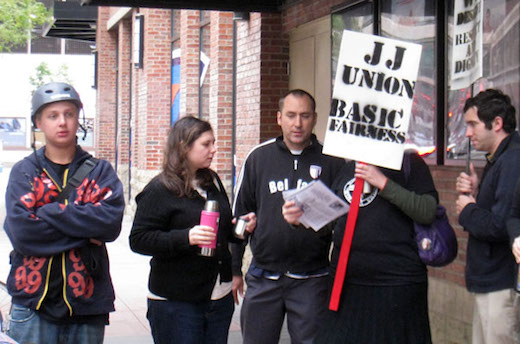
Minneapolis Jimmy John's workers strike for the right to join a union in 2011.

Minneapolis Jimmy John’s workers strike for the right to join a union in 2011.

Ask any person not directly employed in the arts or finance, and she will tell you that work sucks. It’s weird, because our parents and grandparents talked as if work were the best thing in the world, or at least a primary source of meaning in their lives. Then somewhere between Vietnam and Office Space, the indignity of the office became a standard motif in movies and television. That conceit seems almost quaint in a 21st-century employment landscape that features full-time “contract” work, wage theft, and stagnant pay. In a book called The Fissured Workplace, Boston University professor David Weil argues that work has become “debased” by management structures that separate employers from employees. Two other authors, Applebaum and Batt, see that as the inevitable outcome of three decades of leveraged buyouts.
Continue reading

Friday links! Portrait of the artist as kind of a douche edition

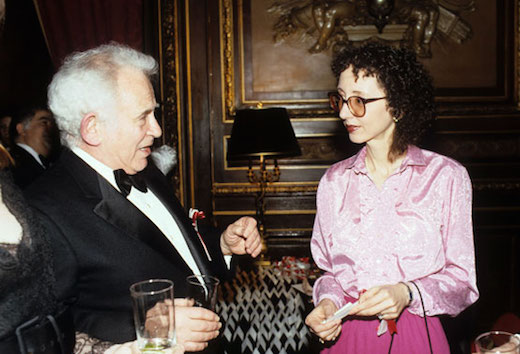
Norman Mailer and Joyce Carol Oates at the 1987 PEN dinner in New York City

Norman Mailer and Joyce Carol Oates at the 1987 PEN dinner in New York City

The phrase “young artist” is probably a contradiction in terms. An artist is defined by what he or she makes, and young ones have by definition not had much time to make stuff. Interestingly, the per capita number of self-identified artists in any population goes way up as the population gets younger. Most people decide they are artists first, and then they make some art. Today is Friday, and artistry—if not artistic achievement—is mostly a state of mind. Won’t you romanticize your dysfunction with me?

Continue reading

Asked about Title X, candidate for county commission retreats to passive voice

Candidate for Missoula County Commissioner Vicky Gordon

Candidate for Missoula County Commissioner Vicky Gordon—photo courtesy of the Missoulian

In a 2012 letter to the editors of the Missoulian, Vicky Gordon observed that “yes, each of the 56 million aborted children has a soul; each is a person with a job to do, a life to live, and an innate dignity…The unborn are the same as we are. If someone kills us, that doesn’t mean that we never existed.” It was a strong cup of coffee, and not just because it appeared to count pregnancies prevented by IUDs among the number of “aborted children.” I have not been able to confirm the allegation that Gordon is a regular protestor outside of Blue Mountain Clinic. But we all know what she did when the Missoulian asked her whether she might reject Title X funding for Missoula County, as commissioners in Ravalli did last year. She found refuge in the passive voice:

Title X is federally funded and has been administered in Missoula without incident. I do not foresee that this would change.

So close to a definitive answer and yet so far. The vaguely alarming mystery of what Gordon might do if elected to a six-year term as commissioner is the subject of my column in the Missoula Independent this week. You should read it even if you don’t live here, because Montana politics are fascinating. We’ll be back tomorrow with Friday links, including an amazingly disingenuous mailer in support of Lawrence VanDyke. That’s your tease.


On trimming the quotes

The author and an unidentified woman with bad taste

The author and an unidentified woman with bad taste

One of the dark arts I learned as an English major was how to trim a quote. You write an English paper by thinking of an argument and then finding quotes in the text to support it. Your reader will encounter these quotes in the context of your argument, not the original material, so it’s important to crop and frame them in a way that makes sense. Like karate or bagpipes, this skill can be used for good but easily bends to evil. I present Madeleine Holden’s essay in Wondering Sound, Women Don’t Collect Music to Impress You, Dan Brooks.

Continue reading