Before you freak out, that 29% figure is not scientific. It’s from research conducted by the Washington Post’s Tom Herrera, who last summer counted all the posts his Facebook friends produced in a 24-hour period and cross-referenced them with what appeared in his News Feed. No one outside Facebook knows how the News Feed algorithm actually works, since gaming it is a multimillion-dollar industry. But the old Facebook, where you friended people and then saw everything they shared on a homepage, has been defunct since 2008. The new Facebook tracks your behavior on the site and customizes your News Feed to show you only what you really care about—in my case, baby pictures and articles about catcalling.
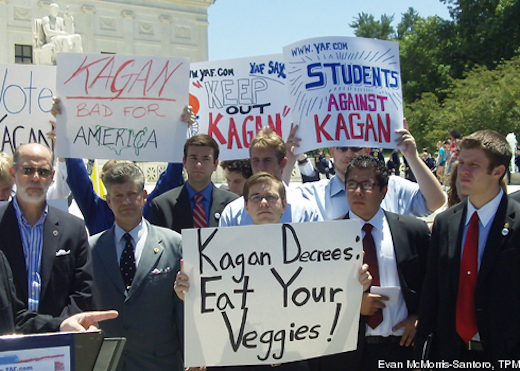
Friday links! The kids are all terrifying edition
Is there any person more alarming than a college Republican? I understand 30 year-old home-buyers and child-rearers voting for whomever might give them a tax cut. I can even empathize with the Boomers’ urge to return America to the dimly remembered conditions of their childhoods. But what kind of 20 year-old is nostalgic for good old days he never experienced? Whose youthful idealism leads him to march for fewer restrictions on business and a return to traditional values? Today is Friday, and the kids have turned from their natural interest in drugs and butt stuff to embrace conservative politics. Won’t you marvel at this wasted youth these unwasted youths with me?
Does money buy votes, or does it just buy cynicism?
What if corporations dumped huge amounts of money into politics not to make you vote one way or the other, but to convince you that your opinion doesn’t matter at all? They aren’t: corporations are dumb, except possibly in the areas of touch screens and browser cookies. But what if that was the effect of money if not the intent—to make you despair of your own role in American politics and, eventually, abandon it? The conspicuous spenders of post-Citizens United politics—and, in their own way, the anonymous ones—don’t need to convince you to vote for a particular candidate. They need only convince you to stay home. Money fills the politics that Americans abandon. That’s my contention in this week‘s column for the Missoula Independent, at least. We should take solace in the re-election of Montana Supreme Court Justice Mike Wheat, whose race was a study in money versus qualifications. To paraphrase Dark Helmet, good will always triumph over marketing, because marketing is dumb. We’ll see you tomorrow with more hopeful declarations not necessarily grounded in fact.
GOP routs Dems in history’s most expensive midterm election
The results are in, sort of, and yesterday’s elections were a resounding victory for the Republican Party. You might replace “resounding” with “pyrrhic” and also get a true sentence. Candidates and unaffiliated groups spent $4 billion this cycle, making the 2014 midterms the most expensive in US history. The financial services industry won the dubious honor of spending the most, donating $171 million to candidate and the groups that support them. And what hath all that money wrought? The GOP picked up at least seven seats in the Senate, giving them control of the other house of a Congress that happens to be the least productive in history. We’re just busting records left and right.
Time calls 2014 election “end of post-partisan dream”
Over at Time magazine—which may just be a website now—Michael Scherer notes how far we’ve come since 2004, when a young firebrand named Barack Obama declared that “there’s not a liberal and a conservative America; there’s a United States of America.” Props to The Cure for the link. Shortly after that speech, we re-elected George W. Bush, hated him, and gave control of Congress to the Democrats in 2006. Then we elected Obama, hated him, and gave the House to Republicans in 2010. Now we appear to be on the eve of repeating that process with the Senate.