
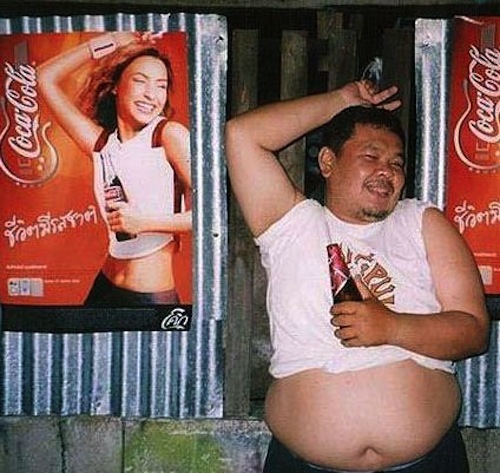
Judge Milton A. Tingling, if that is his real name, has invalidated New York City Mayor Michael Bloomberg’s ban on large, sugary beverages, calling the law “arbitrary and capricious.” Capricious, yes: milkshakes were exempted; 20-ounce coffees maybe became illegal once you put sugar in them; 7-11 didn’t count because it’s a grocery store, while bodegas did. But arbitrary? Approximately one million studies have linked soft drink consumption to obesity, diabetes and a raft of other health problems afflicting Americans in increasing numbers. Sugary drinks are bad for you. We just can’t go making laws about them.
Let me preface this discussion by saying that I believe virtually everything should be legal. My understanding of American jurisprudence is grounded in the time-honored legal principle of ne quid faciat mihi, or don’t tell me what to do. Cigarettes are gross and will gradually turn you into the Crypt Keeper, but still we let adults and most teenagers smoke on the understanding that we get to judge them. In this way, an informed society polices itself.
We take a similar approach to alcohol. Few people would argue that drinking six Cokes on Friday night is worse for you than six whiskeys, but there is no Bloomberg liquor ban. We have yet to draft a law against watching hours of reality television each day, or wearing Crocs everywhere, or any number of other behaviors that are corrosive to society in the aggregate or at least unpleasant to look at. This is America, and that’s just not how we do.
That said, there is no federal reality television subsidy. There are not cigarette machines in just about every school and workplace in the country. When you order a cheeseburger at McDonald’s, you do not get to choose between six different 20-ounce glasses of liquor or a slightly more expensive bottle of water. And while drinking six whiskeys at once is worse for you than six Cokes, drinking one Coke every day may indeed be worse than one whiskey.
For reasons too complex to summarize or maybe even know, we have made sugary drinks a ubiquitous aspect of our daily lives. What makes soda such a problem is precisely that it is not so bad for you; rather, it is pernicious. You can have one at work and one when you’re watching TV at night and suffer no ill effects, right up until you realize you’ve gained 30 pounds and have diabetes. In very broad terms, that is essentially what happened to the United States over the last four decades.
That pernicious quality is also what makes sugary drinks a bad object of legislation. Structural flaws of the Bloomberg ban aside, it’s exactly the kind of law that people chafe against. The damaging aspects of soda are subtle, whereas a prohibition from the mayor is about as ham-handed as you can get. In a situation where the protective benefits to individuals are hard to detect, Bloomberg drafted a policy whose infringement on liberty was glaringly obvious.
It’s worth thinking about why the NYC soda ban failed, because sugar—in drinks, in cereal, in storebought bread, on fries, everywhere—may be the tobacco of our generation. There was a time when doctors smoked, when bus drivers smoked while they drove, when people smoked in elevators. That public health screwup was corrected gradually, by chipping away at people’s liberty in restaurants and at work, ordinance by ordinance. The net infringement on the rights of the individual was probably just as great as in Bloomberg’s soda ban, but it didn’t happen all at once. Like lung cancer or type II diabetes, it was a gradual progression.
Sugary drinks are a cultural problem, and you can’t solve cultural problems with bans. I admire Bloomberg’s effort to address what appears to be a crisis in public health, but I cannot endorse his methods. Sooner or later, we are going to need to figure out what to do about everyone drinking soda until their insulin systems shut down. The solution is not going to be as easy as passing a law.


Yeah but … for the 1.6 million people on the island of Manhattan, fighting fatness isn’t really about public health; it’s about real estate.
“The solution is not going to be as easy as passing a law.”
1) Stop subsidizing corn
2) Punitive federal tax on products with >X% recommended daily value of sugar
You do well highlighting the liberty issue (no ban), and the muddling equivalencies between soda and alcohol and cigarettes (yes ban). You wisely note the restrictions on liberty regarding alcohol and cigarette availability.
You’re right, it is pernicious damage that distinguishes soda from clear and present dangers. But where I lose you is when you point out that because alcohol and cigarettes are also pernicious but we do not ban them, the soda ban seems arbitrary.
Drugs, man. We ban the fuck out of those, and they pose the same risks and impose the same costs on society as regular usage of soda, alcohol, or cigarettes. Shit, maybe even fewer. Can you even snort coke six times in one night? Take ecstasy everyday?
Do you consider drugs a cultural problem unfit for a ban/no ban solution?
The pickle we find ourselves in is trying to use equivalency to reason. It’s sensible that if we restrict A, and A is like B, then we should restrict B too. This kind of reasoning is great for moral consistency, helping us see how kidnapping a neighbor’s sick cat and taking it to the vet (which 77% of people find moral) is morally equivalent to kidnapping children from gay parents (some smaller percentage)(see: Combatblog! August 2012). But it’s terrible for figuring out whether weed should be legal or illegal. Equivalency-based reasoning cannot distinguish whether weed should be legal, because it is as much like alcohol as it is heroin.
I’m in the spam bin on this post. I think the length of time it takes me to write the post determines whether a post with HTML will be accepted or not. I can use HTML to hyperlink, but only if I’m quick.
That’s an interesting theory. It seems counterintuitive for Aksimet to do that, though, since spambots would presumably take a very short time to write their comments.
Meanwhile, Mississippi is trying to aggressively ignore the problem:
http://capsules.kaiserhealthnews.org/index.php/2013/03/mississippi-passes-anti-bloomberg-bill/
Damn it!! It’s not a “soda ban” or “prohibition”. I’m not sure if you’re misinformed or just being deliberately obtuse about this (you do get it right in your opening), but the distinction between banning soda and banning enormous cups of soda is important. Bloomberg’s rule allowed people to drink as much as they want, they just had to consciously buy multiple cups. It was a sensible government health measure, not a prohibition against drinking soda. I should hope that once marijuana becomes legal, there will be some government controls on quality and against overuse as well…
I love the classicist’s comment.
Consumption of soda creates personal health problems that become public health problems because of pooled resources in social services and shared risk in private insurance. Obviously, society needs to be very careful about restricting individual choice, but in general I am comfortable deeming the right to consume a giant soda unessential if it leads to hundreds of millions of dollars in health costs.
Perhaps of more interest to Dan: does this sort of ban address individual freedom more than producer freedom? What does it mean to have the freedom to choose to drink a sugary substance (or smoke a cigarette) that is highly physically addictive, marketed to all people using the most sophisticated approaches money can buy, given to kids early to develop dependence and passed along in family habits, etc?
And is the freedom someone like me exercises to have or not have a 60 oz soda different than the freedom someone more susceptible to the above exercises? I can buy a $4 kombucha instead of a 75-cent soda, but many people cannot. Banning large sodas keeps people from buying the sodas but also forces producers to find something different (and hopefully better) to sell to them.