
“Lenon” surpasses “Lennon” on Twitter, creating awesome metaphor

John Lennon, seen here in a phase of his expression that proved less popular than repeating how a woman loves you

As anyone who heard “Imagine” fifty times at the dentist will tell you, yesterday was the 30th anniversary of the assassination of John Lennon. The former Beatle has always been a cultural lightning rod, in part because of his intense popularity among people who do not otherwise like music, and in part because he was—in perhaps the most accessible, non-threatening use of the phrase ever—the smart one.* It was therefore satisfyingly ironic when, around 11:30 Eastern yesterday morning, “Lenon” eclipsed “Lennon” as a trending topic on Twitter. “Lenon” continued its meteoric rise throughout the day and, as of this writing, has knocked “Lennon” clean off the trending topics list. It was a watershed moment in the measurement of world stupidity. Either that or it was a startlingly apt metaphor for our national discourse, naturally synthesized by our most contemporary medium of communication—a free hint from the ghost in the machine.
Continue reading

Close Readings: Sarah Palin and “refudiate”

Sarah Palin, seen here monopolizing a city council meeting in A Just World.

Yesterday, Sarah Palin risked the loyalty of her constituents by announcing her opposition to a planned mosque at Ground Zero, via Twitter. She’s since deleted that post, for reasons the foregoing article makes obvious, but here’s her original tweet:

Ground Zero Mosque supporters: doesn’t it stab you in the heart, as it does ours throughout the heartland? Peaceful Muslims, pls refudiate.

“Refudiate” is, of course, not a word. It seems to be a concatenation of “refute” and “repudiate,” or just a one-letter typo, although Palin’s subsequent defense (see below) suggests the former. The commentariat regards her use of “refudiate” as a gaffe, and they’re having a pretty good time with it. As is often the case, though, Palin is stupid like a fox. It’s a good thing “refudiate” is in that tweet, because it distracts from the rest of it—and you know what that means. When meaning tries to hide behind language, and also when the Combat! blog headline  has “close reading” in it, it’s time for another Close Reading.

Continue reading

Friday links! This modern world edition

Minds more astute than mine have pointed out that the time machine must be impossible, because if it will have beeninvented, we surely would have had visitors from the future by now. Maybe, though, they just don’t want us to bore them with arguments about how especially crazy everything is now. Surely our present moment constitutes an ordinary broomstroke in the sweep of history, but it seems crazy and futuristic. Ours is an age shocked by its own novelty. Whether we’re lauding the world-changing potential of Twitter or decrying the precipitous fall of old-fashioned morality, we seem to be a nation out of time, blithely declaring each day the turning point we’ve all been waiting for or the final goodbye of the world we once knew. As Bob Dylan once said, the times, this is going to be a really short concert because I am super old. In preparation for the last weekend of the beginning of our lives, Combat! blog presents links to stories that indicate the onset of a new age, if only by our panicked resentment of the change. Won’t you turn a little of the future into the past with us?

Continue reading

Friday links! Spades are spades edition

I think this picture is what's been missing from our increasingly tedious Friday visual puns, if you know what I mean.

It’s the end of the week, and TGIFF, you B’s. Maybe it’s just the unseasonably warm weather here in Montana, but I can’t help but feel that a veil is falling away. Ours is an impressively euphemistic society, where bitter spite goes dressed in the robes of parliamentary procedure and cold depredation smiles warmly from the podium. Unlike a lie, though, the truth is there whether you’re talking about it or not, and like the gay director of your church camp, it will eventually out itself. This week was a surprisingly good one for calling things by their right names, to the point that even our usually gloomy Friday links have taken on the rosy glow of…god, I can’t think of the word. What’s that thing that’s the opposite of despair? You know, the thing that rich charlatans laugh at? I know it’s a political strategy of some sort, but I feel like it has an archaic definition, too. Ah, well—I’m sure I’ll think of it, and if I never do I’ll still have consumer electronics. In the meantime, enjoy this week’s link roundup, in which a mighty herd of telling it like it is goes sweeping across the nation, paradoxically leaving a little less bullshit in its wake.

Continue reading

Mark Cuban inadvertently reveals massive Twitter conspiracy

So, what, it's like a TV Guide or something?

So, what, it's like a TV Guide or something?

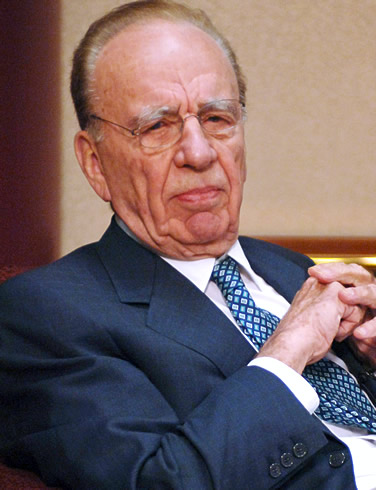
The big news in news that covers the news is that robber baron of the DeBordian Spectacle Rupert Murdoch has threatened to opt out of Google, walling off all News Corp  properties from the search engine’s webcrawlers and generally ensuring that nobody gets anything he makes for free. That’s cool. If Murdoch really thinks that the traffic driven to his various internet properties—which include WSJ.com, FoxNews.com and the purchased-in-a-manner-analogous-to-getting-wasted-and-going-home-with-a-fat-girl Myspace—isn’t worth the irritation of knowing that Google is indexing them for free, he’s welcome to hitch his wagon to Bing. As Weston Kosova of Newsweek sarcastically points out, people are totally going to search for “Sarah Palin teeth vagina” on Google, see what comes up, and then head on over to Bing to see if maybe News Corp has anything else. It’s a terrible idea if you intend to use the internet as a tool to disseminate your news reporting, but if you only see the internet as a way to advertise the other media outlets through which you disseminate your et cetera, it’s great. Murdoch’s problem with Google is that it doesn’t tell anyone about his products without also giving them a way to access them for free. His frustration captures the irony of the internet’s relationship to newspapers and television; it increases their circulation exponentially, while simultaneously making increased circulation almost valueless. It’s a real pickle, and it explains why, six months ago, every conventional news outlet in America couldn’t wait to tell us about Twitter.

Continue reading