Friday links! Birthday edition

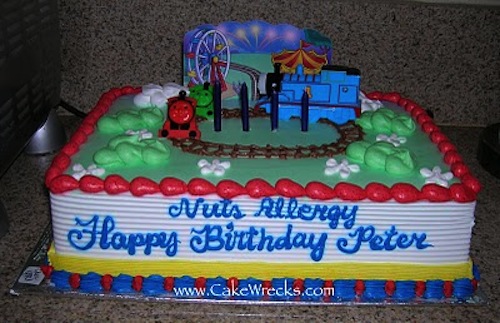
Cake-picture-1

I never thought I would live to see it, but people all over the world can use an electronic network to view pictures of unsuccessful cakes. Today is my birthday. I am 36, which means my opinion is no longer valuable re: movies, popular music or men’s shaving products. I took my brother to the airport at five this morning and drove home with the dim light of the 18-35 year-old demographic growing brighter ahead of me. It was an imperfect analogy, frankly, and I felt the tendrils of despair. Then I remembered that, in the words of MC Lyte or possibly Da Brat, age ain’t nothing but a number. It’s just a number and a social arbiter and a quantifiable reminder of my inexorable progress toward death, but on the plus side, everyone has to do what I say. Today is Friday, so read my arbitrary opinions and marvel at how I made it this far.
Continue reading

Sidewalk funding remains Missoula’s most divisive issue

9CB5809519F1CE6B9BE472ADFF326BD8_600_600

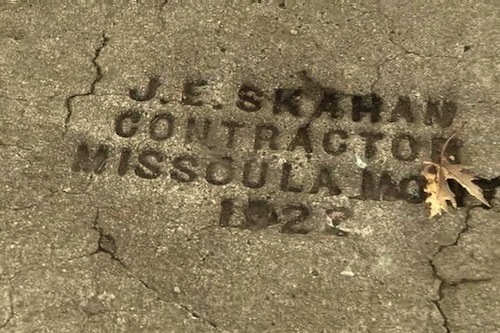
Soup kitchens notwithstanding, the most allegorically significant debate in Missoula politics is sidewalk funding. It’s boring on the surface, but once you peel back the layers you find several fundamental questions about this town’s identity, along with some guy’s sprinkler system. My column in the Indy today is about Robert Hubble and his federal lawsuit, in which he alleges that by using its “police powers” to force him to repair his sidewalk, the city of Missoula has violated his constitutional rights. He’s maybe saying that for rhetorical effect, but he raises an important issue: how much do we want to live as a community, and how much do we want to live as people who leave one another alone? In theory I am 100% in favor of both, which produces no end of problems in practice. Give it a read and shake your head at the sad truth that the social contract is not a binary mechanism. We’ll be back tomorrow with Friday links.

Missoula city council moves to prohibit new homeless shelters

Without a shelter, a Missoula man is forced to stop being homeless.

Without a shelter, a Missoula man is forced to stop being homeless.

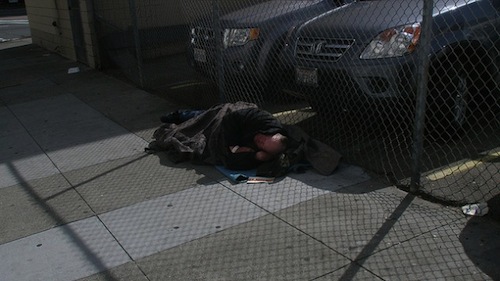
This morning, the Missoula city council is discussing an emergency measure to “prohibit new homeless shelters, soup kitchens and similar uses” until it can update municipal regulations. The emergency is that Union Gospel Mission—formerly the 3:16 Mission—has leased the old Sweetheart Bakery building on West Broadway. That’s how it appears, anyway. Councilman Adam Hertz insists the measure is “not necessarily geared at one entity,” even though the proposal would take effect retroactively and therefore block the mission’s plans to move. The important thing to remember, as the city council passes an emergency retroactive law to stop homeless shelters, is that they’re all committed to helping the homeless.

Continue reading

Plaintiffs in Facebook settlement get nothing , but their lawyers get $2.3M

A Facebook

A Facebook

Adam Liptak at the New York Times alerts us to a possible Supreme Court review of the settlement in Lane v. Facebook, a class-action suit alleging that Facebook violated users’ privacy with the Beacon feature. The Beacon feature, now discontinued, automatically posted video rentals and purchases to users’ feeds in a feature that could never have angered them in any foreseeable way. That’s not important now. What’s important is that plaintiffs’ lawyers in Lane v. Facebook negotiated a settlement in which members of the class got nothing, Facebook had to give $6.5 million to a new charitable foundation it would partly control, and plaintiffs’ lawyers got $2.3 million. Measured outrage after the jump.

Continue reading

On liking Flashman

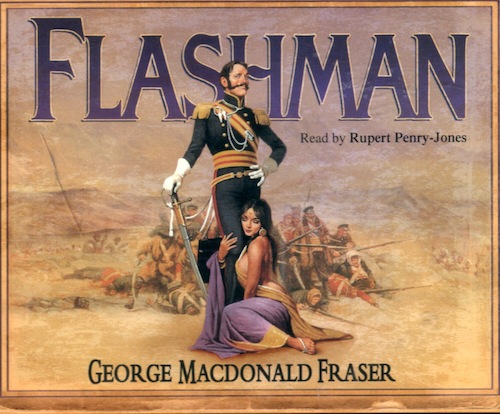
Flashman

Last week, in my continuing survey of funny novels, I read Flashman by Geroge MacDonald Fraser. Formally, it is a comic novel, but really it is a historical adventure story. It is the first-person account of the adventures of one Harry Flashman, originally a bully in Tom Hughes’s novel School Days, and now in Fraser’s imagination a hero of the first Anglo-Afghan War. Flashman has three skills: foreign languages, horseback riding, and a powerful reflex for running away. He is a poltroon, but his cowardice always winds up furthering his reputation as a hero. It all ends well for Flashy even though he conducts himself despicably on pretty much every page, so Flashman is a comedy. It is also a brutal rendering of early 19th-century Britannia, replete with rape, the n-word, and generally bad values. So how should I feel about liking it?

Continue reading