Narrative watch: Obama isn’t angry enough at BP

Whatever you do, do not accidentally type "DP spill" into Google image search. I cannot emphasize that enough.

As the Gulf of Mexico slowly fills with crude oil and burned-off dolphin faces, forcing executives of British Petroleum to move their extra houses to the Pacific coast, an increasing number of Americans are putting the blame squarely where it belongs: on President Obama’s emotional experience. At least that’s what the news tells me. While attempts to cast the Deepwater Horizon spill as Obama’s Katrina foundered on the rocks of that makes no goddamn sense at all, the narrative that the President has displayed insufficient anger at the disaster has found a lot more traction. “Since The BP Oil Spill Began, President Obama Has Been Trying to Convey Presidential Action and Concern; But Is He Showing Enough Emotion?” CBS News asks.* Aside from the baffling meta-semantic demand that the President “convey Presidential action,” CBS pretty much captures the signature elements of the narrative. First, the President can’t really do anything. Second, if he doesn’t act more pissed off, people are going to think he doesn’t care. It’s an argument that presumes that Obama’s response to the disaster is reasonable, and also that people are too stupid to recognize it as such.

Continue reading

Oh god, no!

Of the four promises made on the chalkboard below the window, only one is true—although "party party" is basically just an exhortation.

Cheapshots (and Beer,) arguably the best bar in New York—and all subjects become increasingly arguable the longer you stay in there—has been closed by order of the city for “illegal activities.” According to Allison L Arenson, the attorney prosecuting the case, “The community has severely suffered, and continues to suffer, as a result of the illegal activities…interfering with the health, safety and well being of those who live, work and visit in the surrounding neighborhood.” I don’t want to be unnecessarily negative, here, but there is no way we’re going to win this one. The attorney for the plaintiffs obviously has a made-up name, and chances are Cheapshots will never see trial. It’s just going to wake up in a basement somewhere and see Bernard Kerik with a car battery and three feet of lamp cord and confess to everything.

Continue reading

Friday links! Hung over and lazy edition

Thursday was such a productive day, too. But in Missoula, as in all decent-hearted places, Thursday Night is Fun Night, and “fun” is a concept temporally bound. I totally had fun last night, and I’m still having fun now. It’s just that now “fun” means a headache and scrambled eggs with srirachi sauce and, bizarrely, feta cheese. This is how William Faulkner lived every day of his life, pretty much, and he wrote As I Lay Dying. I have yet to produce the great Southern gothic novel, but I’m sure that with a couple more nights like last night, everything I write will be filled with images of shame and decay. In the meantime, we’ll have to content ourselves with the actual, non-literary decay of American politics and culture, to prepare ourselves for a weekend spent eating pizza and watching Blade Runner. Behold!

Continue reading

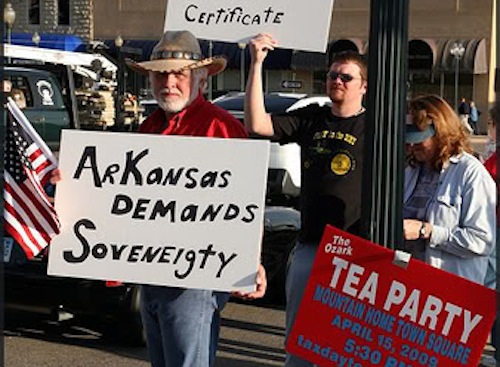
Tea Party wants to repeal 17th amendment

Dog demands bag of M&Ms.

As the actual policy agenda of the Tea Party slowly condenses—like fog on a mirror held up to Joe McCarthy’s unconscious mouth—opposition to the 17th amendment is emerging as a bizarrely signature issue. If you’re like me, your visceral position on this matter can best be described as, “the what?” The 17th amendment provides for the direct, popular election of US Senators. Prior to 1913, Senators were chosen by state legislators, on the theory that the higher house of Congress would thereby be made more deliberative and less responsive to the whims of the mob. Ironic that, since at least two Republican congressional candidates swept to primary victories by Tea Party support—Steve Stivers in Ohio and Vaughan Ward in Idaho—have recently changed their position on the issue so as to appear less, um, insane. In the annals of things to say that will endear you to undecided voters, pledging to reduce the number of things they get to vote on ranks low. So we come to our usual Tea Party question: Why?

Continue reading

Close reading: Tony Perkins on Don’t Ask, Don’t Tell

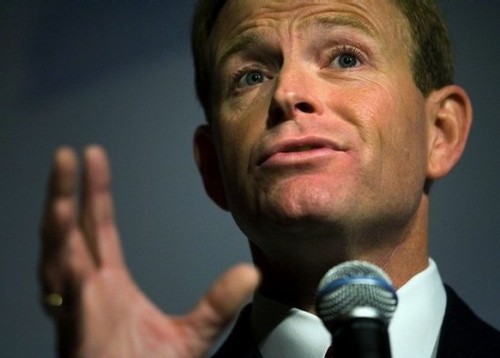
In a turn of events covered quietly by everyone but Fox News, Congress moved closer to repealing Don’t Ask, Don’t Tell last week, and seems finally ready to allow openly gay Americans to serve in the military. I haven’t been to Chelsea lately, but I assume the streets are empty and everyone is in Kabul. While the rest of the country seems poised between ambivalence and total apathy, church people and soldiers—two groups that reveal a surprising overlap—continue to rail against repeal.* Not least of them is Tony Perkins, former Marine and President of the Family Research Council, who argues on CNN’s Belief Blog that “ending Don’t Ask, Don’t Tell would undermine religious liberty.” If that sounds like a weird inversion to you, buckle up. Perkins’s argument is a horse desperately pushing a cart, relying on a series of tropes that would be baffling were they not so familiar. It’s a microcosm for the larger, logically bankrupt argument against allowing gay men and women a place in modern society, and it’s sufficiently typical—and infuriating—to merit a close reading.

Continue reading