
Florent Morellet on being cool in Bushwick

Bushwick: Who wouldn't want to live here?

Who wouldn’t want to live here?

The best stories in the New York Times are not technically news. For example, Florent Morellet, the founder of the Florent bistro in Manhattan’s meatpacking district, is moving to Bushwick essentially to be cool. The meatpacking district was industrial and vaguely dangerous when Florent opened in 1985, just like Bushwick is or was at one time. But when? Much as the meatpacking district is now as far from the mean streets as it could be, with its bridge-and-tunnel nightclubs and Apple store, Bushwick is of dubious currency. It’s definitely not as gentrified as Little West 12th Street, but it is not the same place it was in, say, fall of 2000. That’s when I lived in Bushwick, in a two-bedroom walkup that rented for $750. If you direct your attention to page three of the Times article, you will see that the average rent for a one-bedroom in Bushwick in 2013 is $1,950.

Continue reading

Rand Paul: “Haters” accusing me of plagiarism

Rand Paul (R-KY) plagiarizes a speech from Rick Flair.

Rand Paul (R-KY) plagiarizes a speech from Rick Flair.

In case you hadn’t heard, Rand Paul is currently embroiled in the most tepid plagiarism scandal imaginable. Speaking at Liberty University last week, the senator and self-certified ophthalmologist warned against the dangers of genetic testing by talking about what college kids can understand: Ethan Hawke movies from the nineties. Quote:

In the movie Gattaca, in the not too distant future, eugenics is common. And DNA plays a primary role in determining your social class.

Compare that to the Wikipedia summary of the film, which reads, “In ‘the not-too-distant future,’ eugenics is common and DNA plays the primary role in determining social class.” More middles school-level shirking from the senator’s office after the jump.

Continue reading

Friday links! Bounds of realism edition

Trevor Goodchild confronts some dilemma or another in the "Thanatophobia" episode of Aeon Flux.

Trevor Goodchild confronts some dilemma or another in the “Thanatophobia” episode of Aeon Flux.

This country used to be well written, but I worry that we’ve jumped the shark. The soft-authoritarian security state plotline was interesting when we started it in the early part of the millennium, but it was the characters that made it. I liked watching everyone struggle with their new identities, whether they were willing to sacrifice freedom for security, and the hating/becoming hipsters B plot was fun. Lately, though, I feel like we’ve transgressed the bounds of psychological realism. “America” is becoming another sci-fi melodrama, with the principal characters veering off into behavior that just isn’t believable. Today is Friday, and what started as national character has become caricature. Won’t you turn a critical eye with me?

Continue reading

Happy Halloween! Your child is fat

He is also probably gay.

He is also probably gay.

It’s Halloween, and instead of candy, a person the Atlantic describes as “an outspoken woman in North Dakota” plans to give overweight trick-or-treaters notes for their parents explaining that they are fat. Not the parents—the kids are fat in this scenario, although it’s likely that everyone in their family has similar eating habits, and the kid probably only went as a pumpkin/Jabba the Hutt/Honda Civic because a combination of genetics and environment have made him obese at an age when he has almost zero control over his daily routine or health. But fuck that. Your kid is fat. You sent him out for candy, and he came home with shame. Also probably a lot of candy, since not everyone in North Dakota is a relentless bitch.

Continue reading

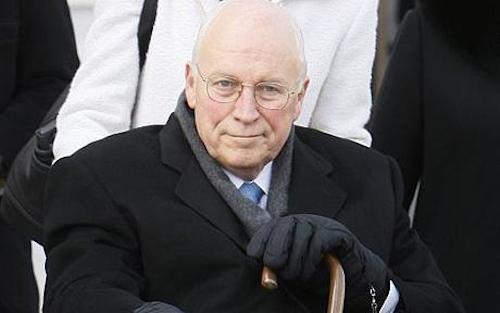
Dick Cheney’s implanted defibrillator explains US terrorism policy

Wear a hat!

Wear a hat!

In 2011, terrorist attacks killed zero people in the United States. By comparison, tornados killed 553, and automobile accidents killed 32,367. Yet we have no department of tornado security, and no one is suggesting that we must sacrifice certain constitutional liberties to be safer on the road. Actually, they are: we submit to speed limits, cell phone bans and other infringements as a necessary cost of reducing traffic fatalities to a manageable level. But it’s a question of degree; if we reduced the speed limit to 15mph, fatal accidents would almost disappear. So why are 32,367 traffic fatalities in a year okay, but 16 deaths from terrorism in the last decade a cause for multibillion-dollar, society-restructuring alarm?

Continue reading